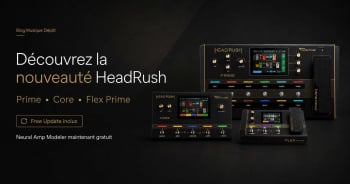
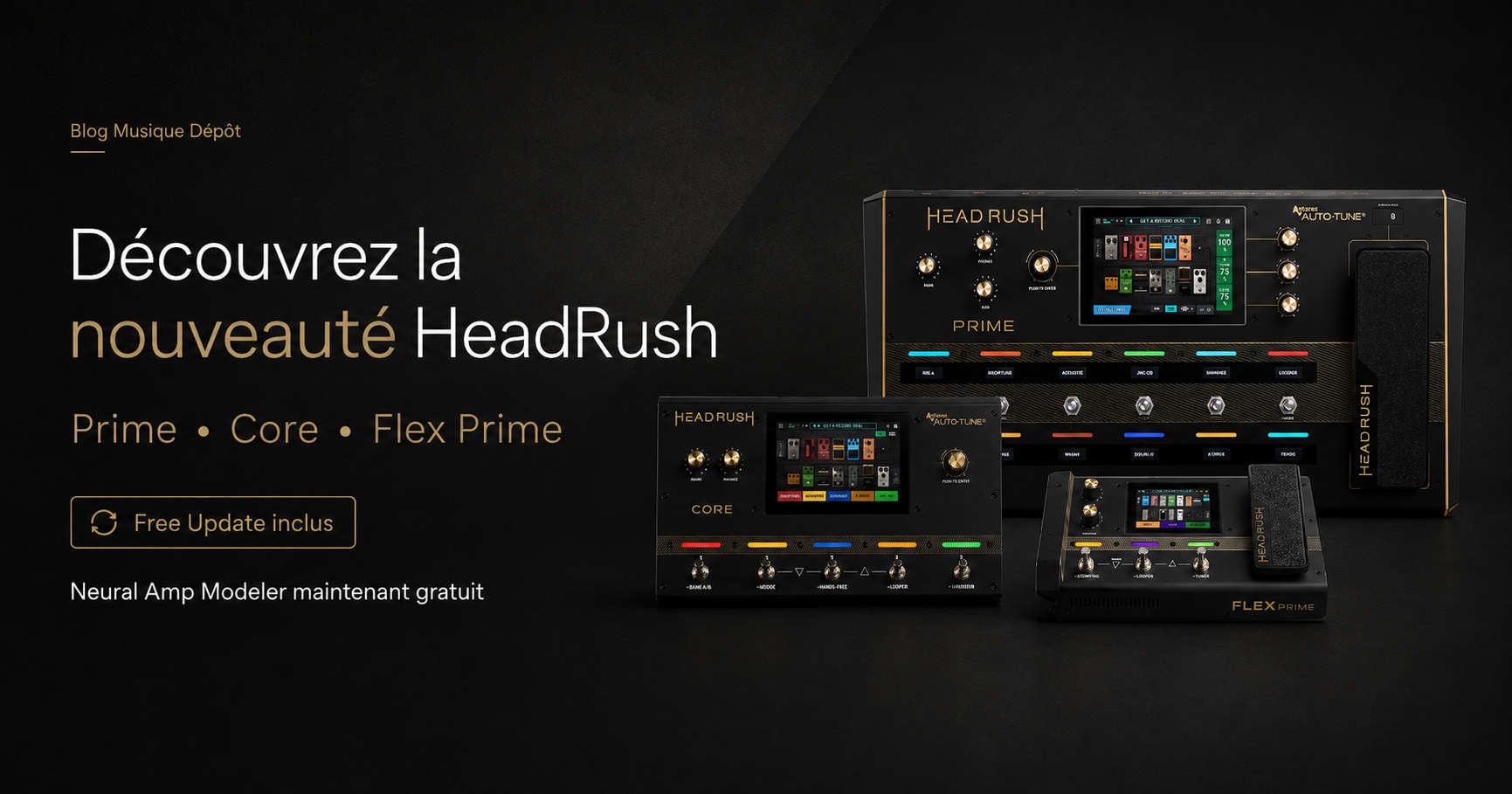
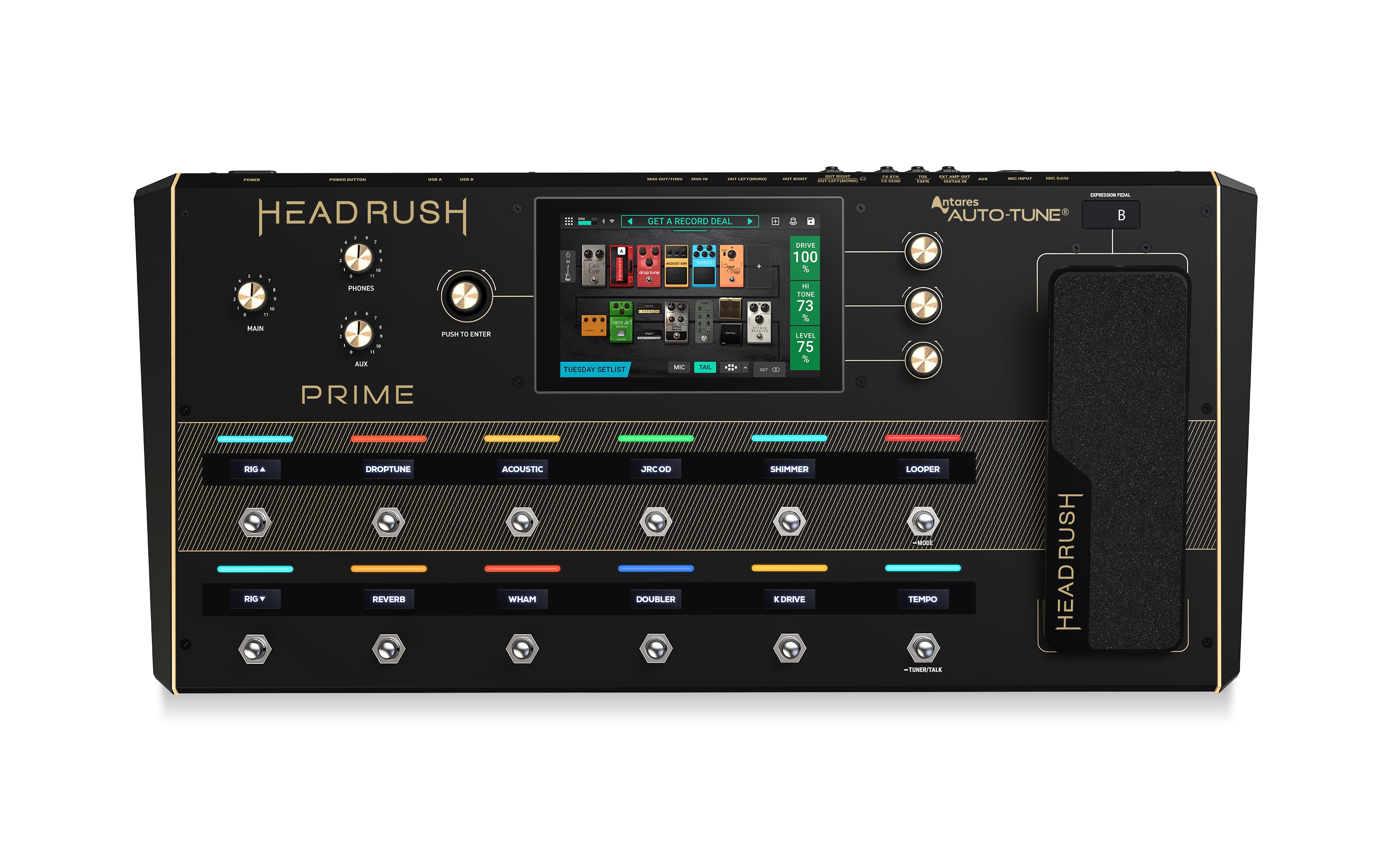
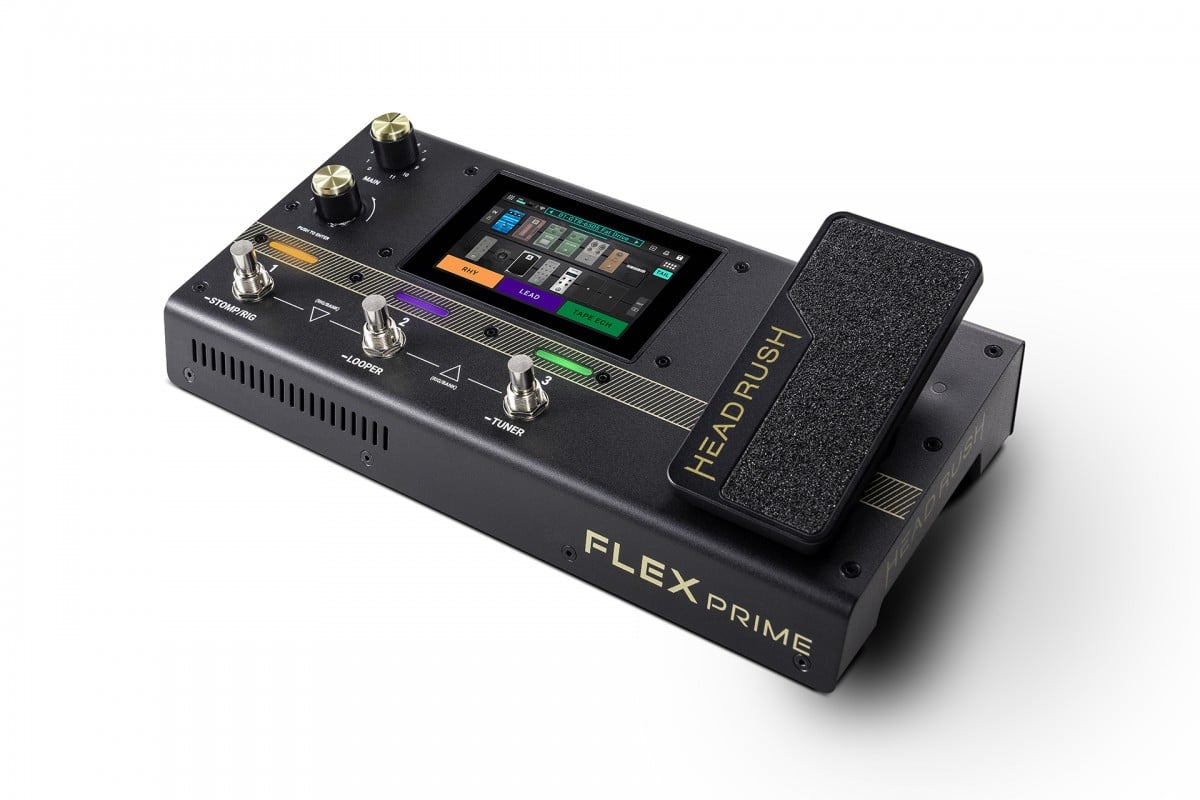
Guitar tone technology just took its biggest leap in years — and it did not come from a walled-garden plugin subscription. It came from an open-source community project called Neural Amp Modeler (NAM), and it is now built natively into three HeadRush multi-effects units: the HeadRush Prime, Core, and Flex Prime. With Firmware 5.1, all three devices connect directly to TONE3000, a free library of community-created amp captures, via onboard Wi-Fi — no computer required.
So what actually is NAM, why is everyone talking about it, and is it really "the end of amp sims"? Here is the full breakdown.
What Is Neural Amp Modeler (NAM)?
Neural Amp Modeler is free, open-source software that uses a neural network — a type of machine learning model — to learn how a real piece of gear (an amp head, a pedal, a full signal chain) transforms sound. Instead of an engineer manually recreating tubes, transformers, and tone-stack circuitry with code, NAM listens to recordings of the real equipment and learns the mathematical relationship between what goes in and what comes out.
The result is called a capture (sometimes "profile" or "model"): a compact file that reproduces the distortion, compression, harmonic character, and playing dynamics of that specific amp at that specific setting — not just a static EQ curve. This is a key difference from an impulse response (IR), which mostly captures the linear frequency response of a speaker cabinet or room. Guitarists often pair a NAM amp capture with a cabinet IR to get a complete tone.
It also works differently than most commercial amp-modeling plugins from brands like Neural DSP or Fractal Audio, which are engineered and voiced as finished products. NAM instead learns from real, measured examples — more like how Kemper profiling works, except NAM is an open, community-built format rather than a closed hardware ecosystem.
How a NAM Capture Is Actually Made
The process starts with a reference rig: a real amp (or pedal, or full chain) connected through a reamp box, with a microphone or DI feeding the signal back into recording software. A specialized test signal — usually a sweep covering a wide range of frequencies and playing levels — is sent through the gear, and both the "before" (dry signal) and "after" (amp output) are recorded.
Training software then shows the neural network thousands of these before-and-after pairs. The network gradually adjusts itself until its predictions closely match the real amp's behavior. Depending on the setup, training can take anywhere from a few minutes to longer for more complex or higher-fidelity models. The result is exported as a .nam file, ready to load into any compatible plugin or hardware — including, now, HeadRush units running Firmware 5.1.
The Pros of Neural Amp Modeler
- Free and open source — no subscription or per-model purchase required to use the core technology
- Massive, fast-growing library — TONE3000 now hosts over 500,000 community-created tones, from amp captures to full rigs and effects
- Exceptional tonal accuracy — NAM captures dynamic response, touch sensitivity, and saturation, not just a frozen EQ curve
- Flexible and shareable — anyone can capture their own gear, pedals, or unusual signal chains and share the result instantly
- No vendor lock-in — because NAM is an open format, captures aren't tied to one brand's closed ecosystem
The Cons and Limitations
- DSP demands — larger, more accurate models require more processing power, especially when running several at once
- Inconsistent capture quality — a community library means quality varies widely; some captures are studio-grade, others are noisy or poorly calibrated, so auditioning before you commit is essential
- Fixed-setting snapshots — most captures represent one exact amp setting (gain, EQ, master volume); you don't get a virtual knob you can freely turn the way you might expect from some proprietary systems
- Curation falls on you — with hundreds of thousands of files and no central quality gate, finding the right capture takes some digging and comparison
NAM vs. Kemper, Neural DSP & Fractal Audio
Kemper profiling and NAM share a similar core idea: learning a real rig from test signals rather than hand-coding it. The difference is that Kemper is a closed, proprietary hardware ecosystem, while NAM is an open format anyone can build on, share, and improve. Neural DSP and Fractal Audio take a different path altogether — their models are engineered and voiced by in-house teams as finished, curated products, which tends to mean more consistency and built-in editing controls, at the cost of the openness and near-limitless variety NAM offers.
| Technology | Approach | Cost | Best For |
|---|---|---|---|
| Neural Amp Modeler (NAM) | Open-source, community captures | Free | Explorers who want huge variety and full control over sourcing tones |
| Kemper Profiling | Proprietary, learned profiles | Hardware + profiles | Players wanting an integrated, closed profiling ecosystem |
| Neural DSP / Fractal Audio | Engineered, curated models | Software/hardware purchase | Players who want consistency and deep built-in editing |
HeadRush Goes All-In: Native NAM on Prime, Core & Flex Prime
With the free Firmware 5.1 update, HeadRush is one of the first major multi-effects brands to bring NAM support directly onto the touchscreen — no laptop required. Owners of the Prime, Core, and Flex Prime can now browse, demo, and download TONE3000 captures over Wi-Fi, load them natively into a rig, and start playing in seconds. It's a genuinely open door into the fastest-growing tone-sharing community in the guitar world — built right into gear you may already own.
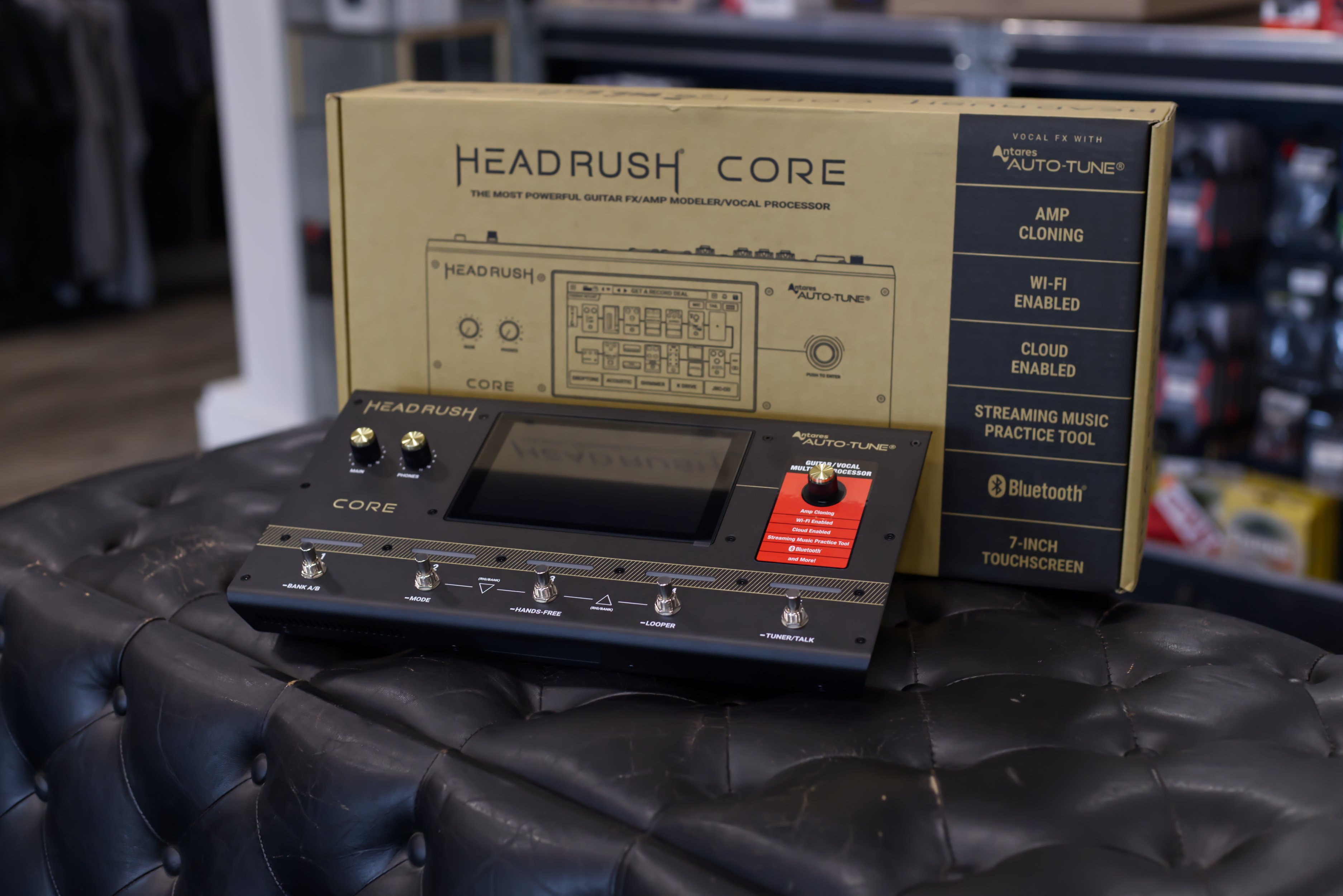
Come play a HeadRush Prime, Core, or Flex Prime at Musique Dépôt and hear the TONE3000 library for yourself — our team can walk you through the whole workflow.
Visit Our Store
At Musique Dépôt, we've been passionate about music since 2006. Our team of expert musicians is here to accompany you on your musical journey, from your first chord to the professional stage.